Emergency First Aid at Work (EFAW) — Delivered at Your Workplace
The most widely held workplace first aid qualification in the UK. We come to you, train your team on your site, and leave every learner with a recognised certificate — all for a single fixed price covering the whole group.
What is the Emergency First Aid at Work course?
The Emergency First Aid at Work (EFAW) qualification is a one-day, FAIB-accredited course that equips nominated first aiders in lower-risk workplaces with the knowledge and hands-on skills to act decisively in a medical emergency. It is the most common first aid qualification in UK businesses — straightforward to organise, completed in a single day, and resulting in a recognised certificate that satisfies the employer's duty under the Health and Safety (First-Aid) Regulations 1981.
We deliver the Emergency First Aid at Work (EFAW) on site at your workplace, so there is no travel, no external venue to book, and no productivity lost to a cross-town commute. Your trainer arrives at your premises, sets up in a room you provide, and your team is certified by the end of the day.
Is this course right for your workplace?
EFAW is designed for employers whose first aid needs assessment identifies a lower-risk working environment — think offices, retail shops, cafes, salons, small warehouses, schools, hotels and similar settings. It is sufficient where the risk of serious injury is low and the main concern is giving a colleague appropriate care while the emergency services are on the way.
As a rule of thumb from HSE guidance (not a legal minimum), a low-hazard workplace with 25 to 50 employees typically needs at least one EFAW-trained first aider. If your workplace involves significant hazards — construction, heavy machinery, chemicals, or manual handling of heavy loads — you may need the fuller First Aid at Work (3-day) course instead.
Not sure which applies to you? We are happy to talk through your situation before you commit. A brief conversation about your headcount, site layout and activities is usually all it takes to point you in the right direction — and it costs nothing.
What your team will learn
The EFAW syllabus covers every skill an emergency first aider needs to respond safely and effectively until further help arrives. By the end of the day, each learner will be able to:
- Understand the role and legal responsibilities of a workplace first aider — including when to act and the limits of their role
- Carry out a safe scene assessment — recognising hazards and protecting themselves, the casualty, and any bystanders
- Perform adult CPR correctly, including rescue breaths, at the rate and depth recommended by current UK resuscitation guidelines (100–120 compressions per minute, 5–6 cm depth)
- Use an automated external defibrillator (AED) — understanding how the device analyses rhythm, when it will and will not deliver a shock, and how to integrate it seamlessly with CPR
- Place an unresponsive, breathing casualty in the recovery position to maintain their airway
- Manage a choking adult — the sequence of encouraging coughing, back blows and abdominal thrusts
- Control external bleeding, including the recognition and management of severe or life-threatening haemorrhage
- Recognise and respond to shock — the signs, the correct position and how to support a casualty while waiting for the ambulance
- Treat minor injuries — small cuts, grazes, minor burns and scalds, bruising and splinters
- Understand first aid kit contents and the ongoing responsibility to check and maintain equipment
- Record first aid incidents accurately — what to write down, where to keep records and how this feeds into RIDDOR reporting where applicable
Many of our instructors also incorporate additional scenarios — such as recognising the signs of a heart attack, or basic head and spinal injury awareness — using the time available within the course structure.
How the day runs
Your trainer arrives ahead of the session start to set up in the room you have prepared — typically around 30 minutes before the learners arrive. The day is structured to alternate between short taught segments and hands-on practical sessions, so your team spends the majority of their time doing rather than listening.
There are no lengthy lectures. Learning happens through guided practice: your team will work through CPR on manikins, practise the recovery position, simulate bleeding scenarios and role-play the sequence for a choking casualty. Scenarios are deliberately realistic so that the skills feel natural in an actual emergency, not just in a classroom.
All training equipment travels with your trainer — CPR manikins, a training AED unit, first aid kit and printed course materials. You do not need to hire or source anything. The only things we need from you are a suitable room, chairs and access to toilet facilities.
Learners can arrive, train and return to work without leaving your building. For most businesses, the disruption of a single training day is far outweighed by the peace of mind — and legal compliance — that follows.
Assessment and certificate
Assessment on the EFAW course is continuous and practical throughout the day — your trainer observes and scores learners as they work through exercises and scenarios, rather than setting a written exam at the close of play. This approach rewards genuine skill over test-day nerves, and ensures that anyone who receives a certificate has actually demonstrated the required standard.
Learners who meet the required standard receive an Emergency First Aid at Work certificate, valid for three years, accredited by the First Aid Industry Body (FAIB). This certificate is recognised by the Health and Safety Executive and satisfies an employer's duty under the Health and Safety (First-Aid) Regulations 1981.
The HSE strongly recommends a short annual refresher during the three-year certificate period to prevent skills from fading. Our Annual First Aid Refresher is a half-day course (approximately 3 hours) designed precisely for this — it can be delivered at your workplace on the same fixed-price model.
Why train your team on site?
Sending staff to a public course might seem like the easier option, but Emergency First Aid at Work training at your workplace offers significant advantages that are easy to overlook until you compare them side by side.
Fixed price for the whole group
from £495 + VAT covers up to 12 people — that is as little as £41 per head for a full group. Public courses charge £80–£120+ per person before travel costs.
Zero travel time or cost
Your team trains in your own building. No travel expenses, no mileage claims, no time lost commuting to an external venue and back.
Minimal disruption to operations
We work around your schedule and your shifts. Training happens in your building, your team is back at their desks the moment the course finishes.
Tailored to your actual environment
Your trainer delivers scenarios that are relevant to your workplace — referencing your equipment locations, site layout and the kinds of incidents most likely to happen in your setting.
Dates to suit you
You choose the date that works for your business. We aim to confirm bookings within 24 hours and can often deliver training within a few working days of your enquiry.
Whole team certified together
Everyone trained on the same day means your certificates expire together, making renewals simpler and ensuring consistent first aid knowledge across your team.
Legal and regulatory background
Every employer in the UK has a legal duty under the Health and Safety (First-Aid) Regulations 1981 to make adequate and appropriate first aid provision for employees. The level of provision — including how many trained first aiders you need and which qualification they hold — is determined by a first aid needs assessment that takes into account the nature of your work, the number of people on site, your working patterns and your proximity to emergency medical services.
The EFAW qualification directly satisfies the requirement for a trained first aider in lower-risk workplaces. There is no legal requirement to use a specific training provider or national brand — HSE guidance (L74) is clear that any competent provider delivering an appropriate qualification is acceptable. FAIB accreditation is a recognised route that gives employers and their insurers confidence that training meets the required standard.
It is also worth noting: the 2024 update to HSE guidance L74 added mental health explicitly to the first aid needs assessment. If your needs assessment suggests mental health first aid support is appropriate, we also offer Workplace Mental Health First Aid on the same on-site model.
Your questions answered
Who needs an Emergency First Aid at Work certificate?
Any business that nominates a trained first aider in a lower-risk environment — offices, retail units, cafes, salons, small warehouses, hospitality venues — typically requires the EFAW qualification. Your employer must carry out a first aid needs assessment under the Health and Safety (First-Aid) Regulations 1981 to determine how many first aiders you need and at what level. HSE guidance suggests that a low-hazard workplace with between 25 and 50 employees should have at least one EFAW-trained first aider, though this is a guideline, not a legal minimum. The right answer for your business depends on your specific circumstances.
How long is the EFAW certificate valid for?
The Emergency First Aid at Work certificate is valid for three years from the date of issue. When it expires, certificate holders must complete the full EFAW course again to remain a recognised workplace first aider. The HSE strongly recommends a short annual refresher during the three-year period to prevent practical skills from fading — our Annual First Aid Refresher is a half-day course delivered at your premises for exactly this purpose. The refresher does not extend the three-year certificate; it simply keeps skills sharp between requalifications.
Do we need EFAW or the full First Aid at Work (FAW) qualification?
The short answer: EFAW (1 day) for lower-risk workplaces such as offices, shops and light commercial settings; FAW (3 days) for higher-hazard environments — construction, warehousing, engineering, manufacturing, and larger organisations where the needs assessment identifies more complex likely injuries. If your team faces a risk of severe bleeding, fractures, chemical burns, or crush injuries, FAW is likely the more appropriate choice. If you are uncertain, give us a call — a brief conversation about your workplace usually makes the right course obvious.
How many people can attend one EFAW session?
Up to 12 learners per session — this is the regulated maximum to ensure every delegate gets meaningful hands-on time with the instructor and can be properly assessed. Our fixed price of from £495 + VAT covers the whole group regardless of numbers. That works out at just over £41 per person for a full group of 12 — significantly less than most public course per-head rates, before you even factor in the travel costs your team would otherwise incur. For organisations with more than 12 people to train, we can schedule additional sessions on the same day or on consecutive days.
Is on-site EFAW training cheaper than public courses?
For groups of four or more, on-site delivery almost always works out less expensive once you account for everything. Public first aid courses typically charge £80–£120+ per person — that is £320–£480 for just four people, before any travel expenses. Our flat rate of from £495 + VAT covers up to 12 people on your own premises, meaning zero travel costs, no mileage claims and no time lost getting to and from an external venue. The convenience is a bonus; the economics usually make the decision straightforward.
Is the EFAW certificate accepted by the HSE, Ofsted and our insurer?
Yes. The EFAW qualification is accredited by the First Aid Industry Body (FAIB), which is a recognised route under HSE guidance (L74). Since October 2013 HSE has not approved any single training provider — employers must satisfy themselves that training is competent and appropriate. FAIB accreditation meets this requirement and the certificates we issue are accepted by the Health and Safety Executive, Ofsted and the vast majority of commercial insurers. No particular brand of first aid training carries a compliance advantage over another — the accreditation route is what matters.
What do we need to provide for on-site EFAW training at our workplace?
Relatively little. We need:
- A private room free from interruptions, with enough floor space for learners to kneel and carry out CPR practice
- One chair per learner and, ideally, tables or a writing surface
- Adequate ventilation and heating/cooling — practical work is more tiring than sitting in a lecture theatre
- Access to toilet facilities
- Parking or unloading access for your trainer's equipment
Your trainer arrives with everything else: CPR manikins, a training AED unit, first aid kits, printed course materials and any disposable consumables. There is nothing to hire or source.
Can someone fail the EFAW course?
Assessment is continuous and practical — your trainer observes learners throughout the day rather than setting a single high-stakes test at the end. Learners who attend the full session and engage with the practical exercises very rarely fail to meet the required standard. Our instructors take a supportive approach: if someone is struggling with a particular skill, the trainer works with them to get it right on the day rather than simply marking them down. Anyone who does not achieve the required standard can arrange a reassessment — speak to us when you book for details of our reassessment policy.
How quickly can you deliver Emergency First Aid at Work training at our premises?
We aim to respond to all enquiries within a few hours and to confirm a date within 24 hours. In many cases we can deliver training within a few working days of your initial contact — which makes us a practical option when a certificate has just expired or you need to get a new team member certified before their first day on the job. Tell us your location, group size and any preferred dates when you get in touch and we will work around you.
Can we combine EFAW with other courses on the same visit?
Yes — and many organisations find this the most efficient approach. A popular combination is an EFAW session in the morning followed by an AED / Defibrillator Training or CPR Certificate course in the afternoon, using the same trainer visit and the same room. It makes the most of the day and means less disruption overall. Let us know when you request a quote and we will put together a combined schedule that fits your working hours.
Courses that pair well with EFAW
Whether your team needs a higher-level qualification, an annual skills top-up, or focused AED training, we can combine courses on a single visit.
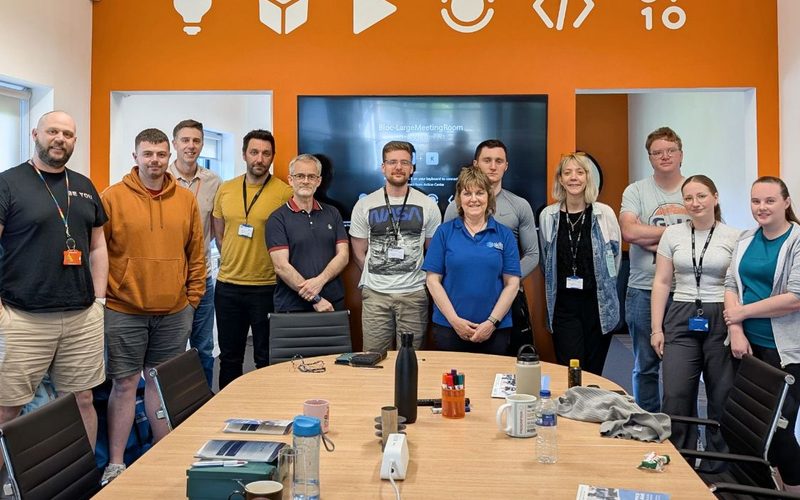
First Aid at Work (3 Day)
The full FAW qualification for higher-risk workplaces — construction, manufacturing, warehousing, engineering. Covers a broader range of emergencies over three days.
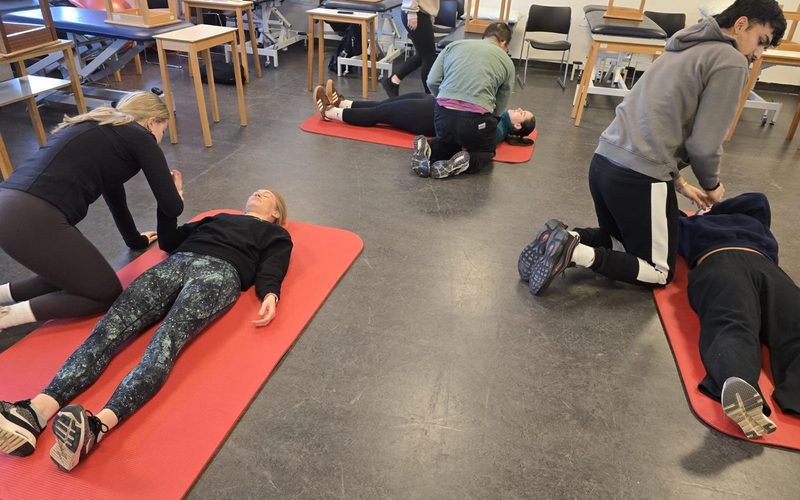
Annual First Aid Refresher
A half-day skills top-up for current EFAW or FAW certificate holders — HSE-recommended each year to keep CPR, AED and choking responses sharp.
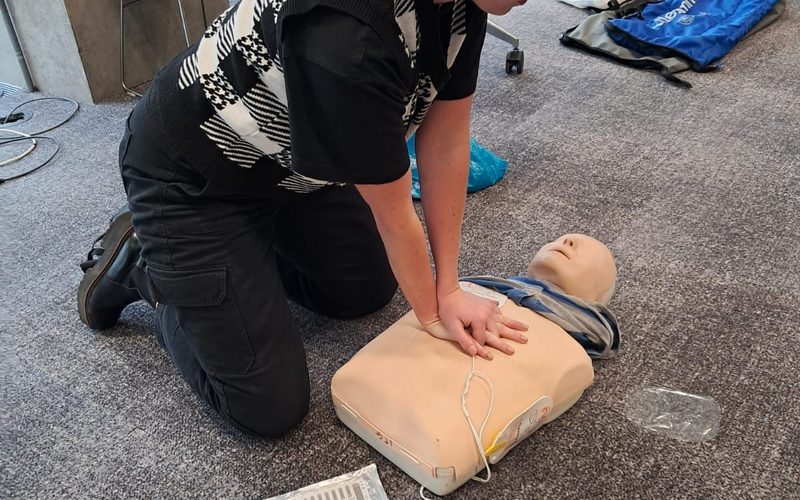
Defibrillator (AED) Training
A focused three-hour session on using an AED safely and confidently in a cardiac emergency — ideal as a workplace add-on alongside your EFAW day.
Ready to get your team trained?
Tell us your location, how many people need training, and any preferred dates — we will come to you and handle everything else. Most bookings confirmed within 24 hours.