Emergency Paediatric First Aid at Your Workplace
A focused, hands-on one-day course that gives childcare practitioners, teachers and anyone responsible for children the skills to respond quickly and correctly to a paediatric emergency — delivered on site at your setting, anywhere in the UK.
Why this course matters
A child in respiratory distress or cardiac arrest needs a very different response to an adult — the techniques, the ratios, the approach to the airway and the order of intervention all change depending on whether you are treating an infant under one or a child over one. Without specific paediatric training, even a confident adult first aider can hesitate at the critical moment.
This Emergency Paediatric First Aid course, delivered by our experienced instructors on site at your nursery, school or childcare setting, gives your team the practical muscle memory and decision-making confidence to act immediately — without waiting for an ambulance. One flat price of from £495 + VAT covers your whole group of up to 12 people, with no travel costs or lost time commuting to an external venue.
Who is this course for?
This course is well suited to anyone whose working day involves the supervision and care of children or infants, including:
- Nursery practitioners and early years keyworkers
- Registered childminders and childminding assistants
- Teaching assistants and learning support staff
- After-school, breakfast and holiday club leaders
- Sports coaches, PE staff and activity leaders working with young people
- Nannies, au pairs and family day-care providers
- Play workers and youth group leaders
The course covers infants (under one year) and children (one year to puberty), so it is relevant across the full range of early years and school-age settings.
Need the full statutory EYFS qualification? If your setting requires the designated always-present paediatric first aider, our two-day Paediatric First Aid (Level 3) — Qualsafe Awards (Ofqual-regulated) — is the qualification that maps to the complete EYFS Annex A syllabus.
What your team will learn
The syllabus focuses on the emergency skills that make the biggest difference in a real incident. By the end of the day your team will be able to:
- Carry out a primary survey (DR ABC) on an infant or child — systematically check for danger, response, airway, breathing and circulation
- Perform infant CPR — using the correct two-finger (or two-thumb encircling) technique, five initial rescue breaths and a 15:2 compression-to-breath ratio
- Perform child CPR — five rescue breaths to start, then 15:2 compressions and breaths at the correct depth and rate (100–120 compressions per minute)
- Use an AED safely on a child — including pad placement, managing a child-specific or adult AED, and minimising interruptions to compressions
- Clear a choking infant — five back blows followed by five chest thrusts; understanding why abdominal thrusts must never be used on an infant
- Clear a choking child — back blows and abdominal thrusts in the correct sequence; transitioning to CPR if the child becomes unresponsive
- Place an unconscious child in the recovery position — adapted technique for infants and children to maintain an open airway
- Control serious bleeding — direct pressure, elevation and wound packing basics for significant injuries in young patients
- Recognise and respond to shock — signs of circulatory shock in children and the immediate management steps
- Manage a seizure or febrile convulsion — protecting the child, timing the seizure, when to call 999, and what to do once it stops
- Recognise anaphylaxis — identifying the signs of a severe allergic reaction and understanding when and how to respond
- Call 999 effectively — what information the emergency services need, and how to give high-quality telephone CPR guidance while waiting for the ambulance
- Prevent cross-infection — hygiene, gloves, safe disposal and reporting responsibilities
How the day runs
Your trainer arrives at your premises before the session starts, sets up the manikins and equipment, and introduces the day with a short, plain-English explanation of how paediatric emergencies differ from adult ones and why specific techniques are needed. There are no lengthy lectures — the focus is on demonstration followed by hands-on practice.
Learners work through a structured sequence of practical scenarios: infant CPR, child CPR, AED use, choking drills for both age groups, recovery positions, bleeding control and seizure management. Your trainer observes, corrects and coaches throughout. Scenarios are repeated until each learner is confident.
The session ends with a practical assessment of each learner. Your trainer gives clear feedback on the spot. There is no written exam paper, and the assessment format is designed to be straightforward for any learner who engages fully with the day.
Approximate timings: a full day including a lunch break and short comfort breaks. No precise clock times are prescribed — your trainer works at the group's pace to ensure skills are embedded, not rushed.
Assessment & certificate
Assessment is continuous and practical throughout the day. Learners are observed performing the key skills — CPR, choking management, recovery position, bleeding control — rather than answering a separate question paper. Learners who meet the required standard are issued an Emergency Paediatric First Aid certificate, valid for three years from the date of assessment, under FAIB accreditation.
FAIB (First Aid Industry Body) qualifications are accepted by HSE and meet the requirements of the Health and Safety (First-Aid) Regulations 1981. The certificate is also accepted by Ofsted in the contexts for which this qualification is appropriate.
Why train on site? The practical and financial case
Sending staff on a public course means travel costs, vehicle time, mileage claims, and staff returning tired after a day away. Booking Emergency Paediatric First Aid on site at your workplace changes that equation entirely:
- Fixed price, unlimited benefit — from £495 + VAT for the whole day, regardless of whether you send four people or twelve. At twelve people that works out at under £42 per head before VAT.
- Zero travel time or cost — staff train in your own building and are back at their desks or with their key children the moment the session ends.
- Minimal disruption — you choose the date, and the session runs around your shifts and ratios. No last-minute cover to arrange because staff are off-site.
- We bring everything — paediatric and infant manikins, AED trainer units, all printed materials and certification paperwork. You just need a room.
- Scenarios in your real environment — your trainer can reference the layout of your setting, your specific first aid kit location and your own emergency action plan. That real-world relevance is impossible to replicate at a remote training centre.
- The whole team learns together — consistent knowledge, consistent procedures, no version drift between staff who attended on different days at different venues.
The regulatory background: EYFS, HSE and paediatric first aid
The Health and Safety (First-Aid) Regulations 1981 require every employer to provide adequate first aid provision based on a needs assessment. For childcare settings registered with Ofsted, the EYFS Statutory Framework (DfE) adds a further layer: at least one person holding a current, full Paediatric First Aid certificate must be on the premises and available at all times children are present.
The Emergency Paediatric First Aid qualification (minimum six guided learning hours) is the shorter of the two paediatric pathways. It is well suited for:
- Newly hired Level 2 or Level 3 childcare staff who need to contribute to ratios quickly — the EYFS allows them up to three months to obtain a paediatric first aid certificate.
- Settings where some staff already hold the full Level 3 PFA and additional team members need a solid, FAIB-accredited emergency qualification.
- Any childcare, play or youth setting that wants every member of staff to have practical child emergency skills, not just the lead designated first aider.
If you are unsure which qualification your setting needs, call us on 0800 852 7739 or send us a message — we will give you a straight answer at no charge.
Course summary
- Price
- from £495 + VAT (up to 12 people)
- Duration
- 1 day
- Where
- At your premises, UK-wide
- Accreditation
- FAIB-accredited
- Certificate
- Emergency Paediatric First Aid certificate (valid 3 years)
Frequently asked questions
Who is Emergency Paediatric First Aid training aimed at?
The course suits anyone with day-to-day responsibility for children's safety — nursery practitioners, registered childminders and their assistants, teaching assistants, after-school and holiday club leaders, sports coaches working with young people, and nannies. It is also practical for parents or family members who want hands-on child emergency skills.
Is Emergency Paediatric First Aid the same as the full Paediatric First Aid (Level 3)?
No. Emergency Paediatric First Aid is the shorter one-day qualification covering the emergency subset: infant and child CPR, choking, recovery position, serious bleeding, seizures and basic anaphylaxis recognition. The full Paediatric First Aid (Level 3) is a two-day, 12-hour Qualsafe Awards (Ofqual-regulated) course covering the complete EYFS Annex A syllabus — including childhood illness, asthma, burns, fractures, poisoning, meningitis awareness and more. If your setting requires the designated always-present EYFS paediatric first aider, the full Level 3 is the appropriate qualification.
Does this course meet EYFS requirements?
Emergency Paediatric First Aid is appropriate for many childcare contexts — particularly newly hired Level 2 or 3 childcare staff who need to count in EYFS ratios within their first three months, and settings where other staff already hold the full PFA. The statutory EYFS requirement for the person who must be on the premises at all times is the full Paediatric First Aid certificate. If you are unsure which applies to your role, call us and we will help you work it out.
How many staff can attend one on-site session?
Each session accommodates up to 12 learners. The from £495 + VAT price is a flat rate for the whole group — the more colleagues trained in one session, the lower the cost per head. At 12 people that works out at under £42 per person. Larger teams can be trained across two consecutive sessions at a straightforward additional day rate.
What does our setting need to provide on the day?
A clear, reasonably ventilated space large enough for the group to practise floor-level skills — a training room, school hall or large meeting room is ideal. Your trainer arrives early and brings everything: paediatric and infant manikins, AED trainer units, all printed materials and certification paperwork. Your team needs nothing other than comfortable clothing and a willingness to get involved.
Is there a written exam?
No. The assessment is continuous and practical — your trainer observes each learner performing the core skills throughout the day. There is no separate exam paper to complete. Learners receive clear coaching and guidance as the session progresses, so everyone knows what is expected well before the assessment moment.
How long does the certificate last, and how does renewal work?
The Emergency Paediatric First Aid certificate is valid for three years from the date of practical assessment. When certificates are approaching expiry, simply rebook the same one-day course. We can flag renewal dates for your team if you would like — just ask when you book.
What is the difference between infant and child techniques?
For first aid purposes, an infant is under one year old; a child is one year to puberty. Techniques differ significantly. Infant CPR uses two fingers or the two-thumb encircling grip, with the airway held in a neutral sniffing position rather than tilted back. Choking in an infant is treated with back blows and chest thrusts — abdominal thrusts must never be used on an infant. For children, the approach is closer to adult first aid but with adjusted compression depth and rescue breath volumes. The course covers both groups throughout the day.
Can you deliver Emergency Paediatric First Aid on site anywhere in the UK?
Yes. We deliver across England, Scotland, Wales and Northern Ireland. Travel to most mainland UK locations is included in the course price. Confirm your postcode when you enquire and we will let you know upfront — no surprises on your invoice.
Courses that complement this one
Other training our childcare and school customers often book alongside Emergency Paediatric First Aid.
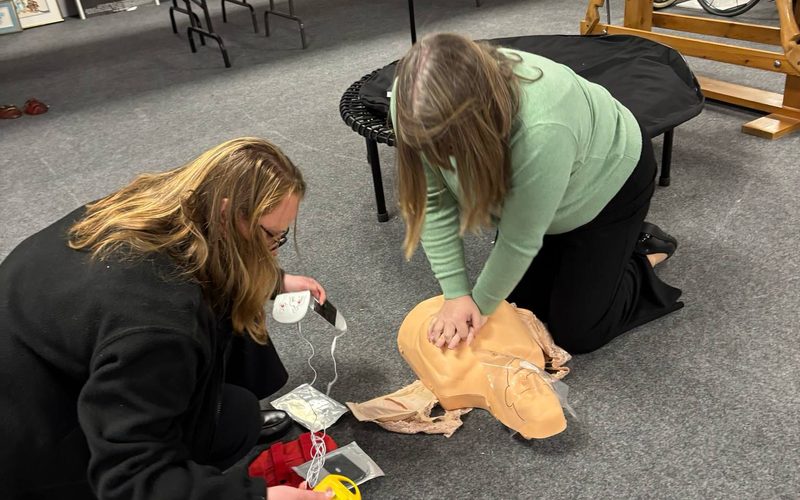
Paediatric First Aid (Level 3)
The full two-day EYFS Annex A qualification — Qualsafe Awards (Ofqual-regulated). The right choice for the statutory always-present first aider.
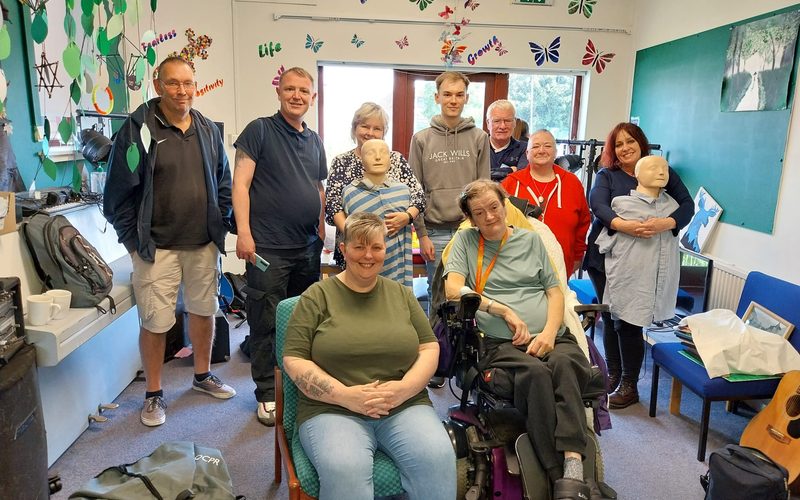
First Aid Training for Schools
First aid tailored to primary and secondary school staff, covering the DfE guidance alongside core first aid skills.
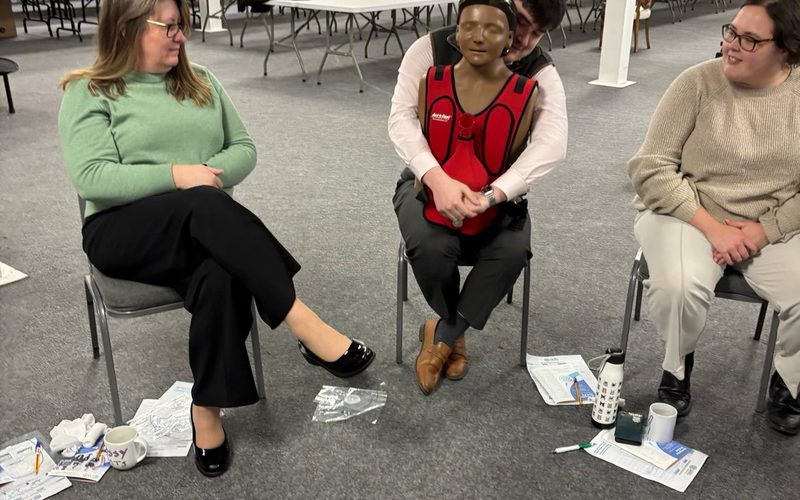
CPR Certificate Course
A practical three-hour session covering adult, child and infant CPR — ideal as a top-up refresher between full first aid courses.
Ready to get your team trained?
Tell us your setting, your location and how many staff need training — we will confirm a date and send a no-obligation quote, usually within one working day.